
Hardscaping guide · Franklin and Brentwood, TN
Flagstone vs Pavers in Franklin and Brentwood, TN: Cost, Look and Upkeep
A plain side-by-side comparison of price per square foot, freeze and rain performance, upkeep and style, so you can pick the right surface for your patio or path.
Quick answer
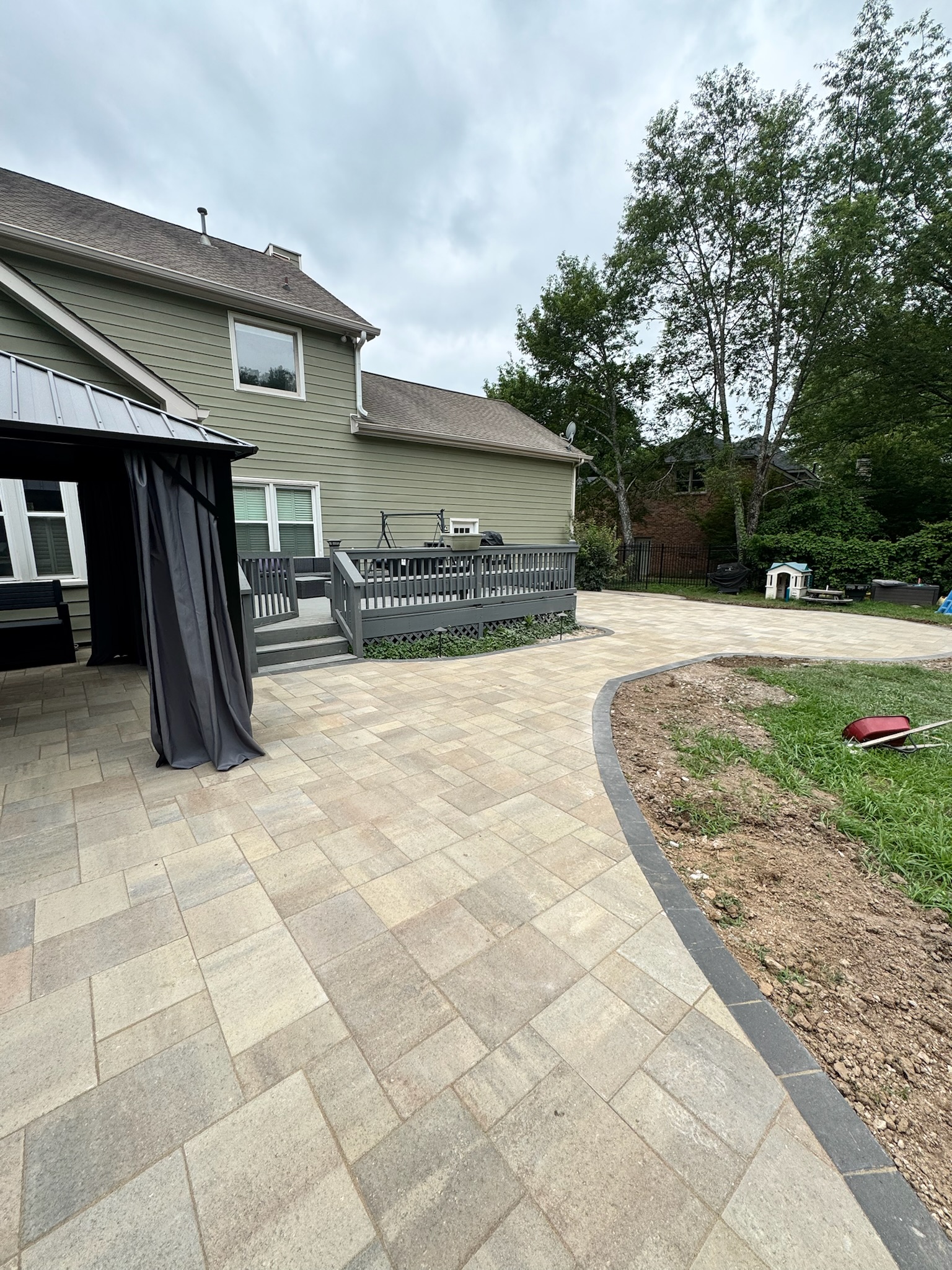
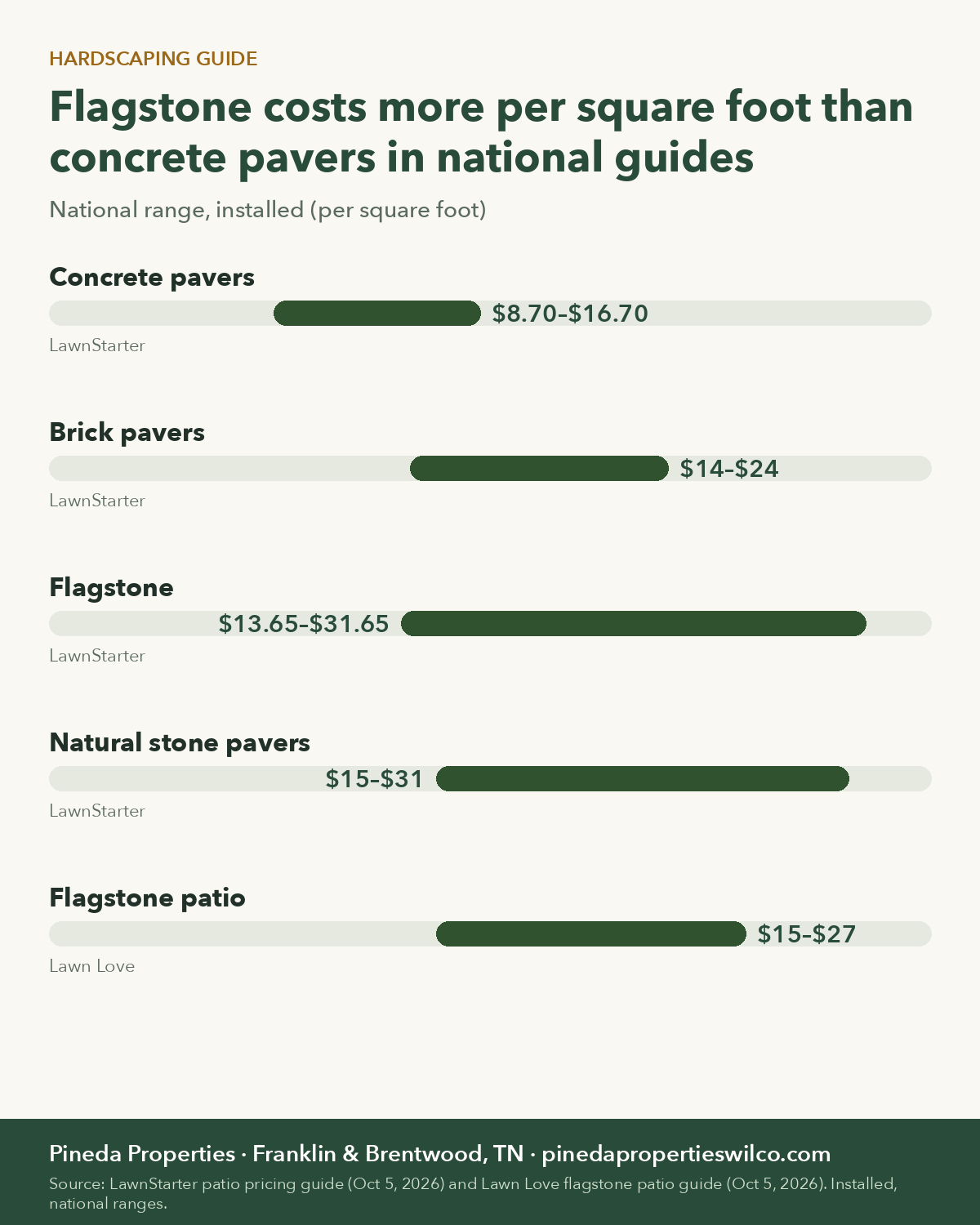
Flagstone usually costs more than pavers. National guides put installed flagstone at about $13.65 to $31.65 per square foot and concrete pavers at $8.70 to $16.70 [1]. Pavers give a level, easy-care surface. Flagstone gives a one-of-a-kind natural look when it sits on a well-built base.
Flagstone or pavers: which is better at a glance?
Pavers win on cost, evenness and easy repairs. Flagstone wins on natural character. Both can last 50 years or more when installed well [4].
| What you care about | Concrete pavers | Flagstone |
|---|---|---|
| Installed cost per sq ft (national) | $8.70–$16.70 [1] | $13.65–$31.65 [1] |
| Surface | Laid tightly together into a unified surface [4] | Stones of varying thickness take more fitting and leveling [4] |
| Freeze and thaw | Interlocking design allows slight movement [4] | Thin sections can crack if the base is weak [4] |
| Upkeep | Sweeping and new joint sand now and then [4] | Reseal every 18 to 36 months in one guide [2] |
| Repairs | Lift out and replace one unit [4] | Mortar must be chipped out and replaced [4] |
| Lifespan | Both can last 50 years or more when installed properly [4] | |
Want the full price picture for pavers? See our paver patio cost guide.
How much more does flagstone cost than pavers?
Flagstone usually runs about $5 to $15 more per square foot than concrete pavers. LawnStarter lists flagstone at $13.65 to $31.65 and concrete pavers at $8.70 to $16.70 per square foot, installed [1].
Part of the gap is labor. Lawn Love puts flagstone labor at $11 to $15 per square foot, and the stone itself at about $3.95 to $5.95 [2]. Irregular stones take time to fit and cut.
Source: LawnStarter national patio pricing guide, updated October 5, 2026 [1]. Bar length shows the top of each range. Installed, per square foot.
Other guides give wider or narrower ranges. Lawn Love lists $15 to $27 for flagstone [2]. Another Lawn Love guide shows $8 to $25 for pavers and $8 to $35 for flagstone [3]. A third guide lists $15 to $22 for flagstone and $10 to $25 for pavers [11]. The ranges overlap, but flagstone sits higher in each guide.
What that means for common patio sizes
| Patio size | Area | Concrete pavers | Flagstone |
|---|---|---|---|
| 12×12 ft (bistro set, small grill) | 144 sq ft | $1,250–$2,400 | $1,950–$4,550 |
| 16×20 ft (dining set and a few chairs) | 320 sq ft | $2,800–$5,350 | $4,350–$10,150 |
| 20×30 ft (dining and lounge areas) | 600 sq ft | $5,200–$10,000 | $8,200–$19,000 |
Size × LawnStarter installed cost per square foot [1]. Surface only. Walls, steps, drainage and features are extra. Not a Pineda price.
For local context, half of the 37 patio projects Pineda quoted in 2025–26 came in between about $8,000 and $23,000 [10]. That covers whole patio projects, not only the surface. Pineda prices each project after a free site visit.
Which holds up better to Middle Tennessee freezes and rain?
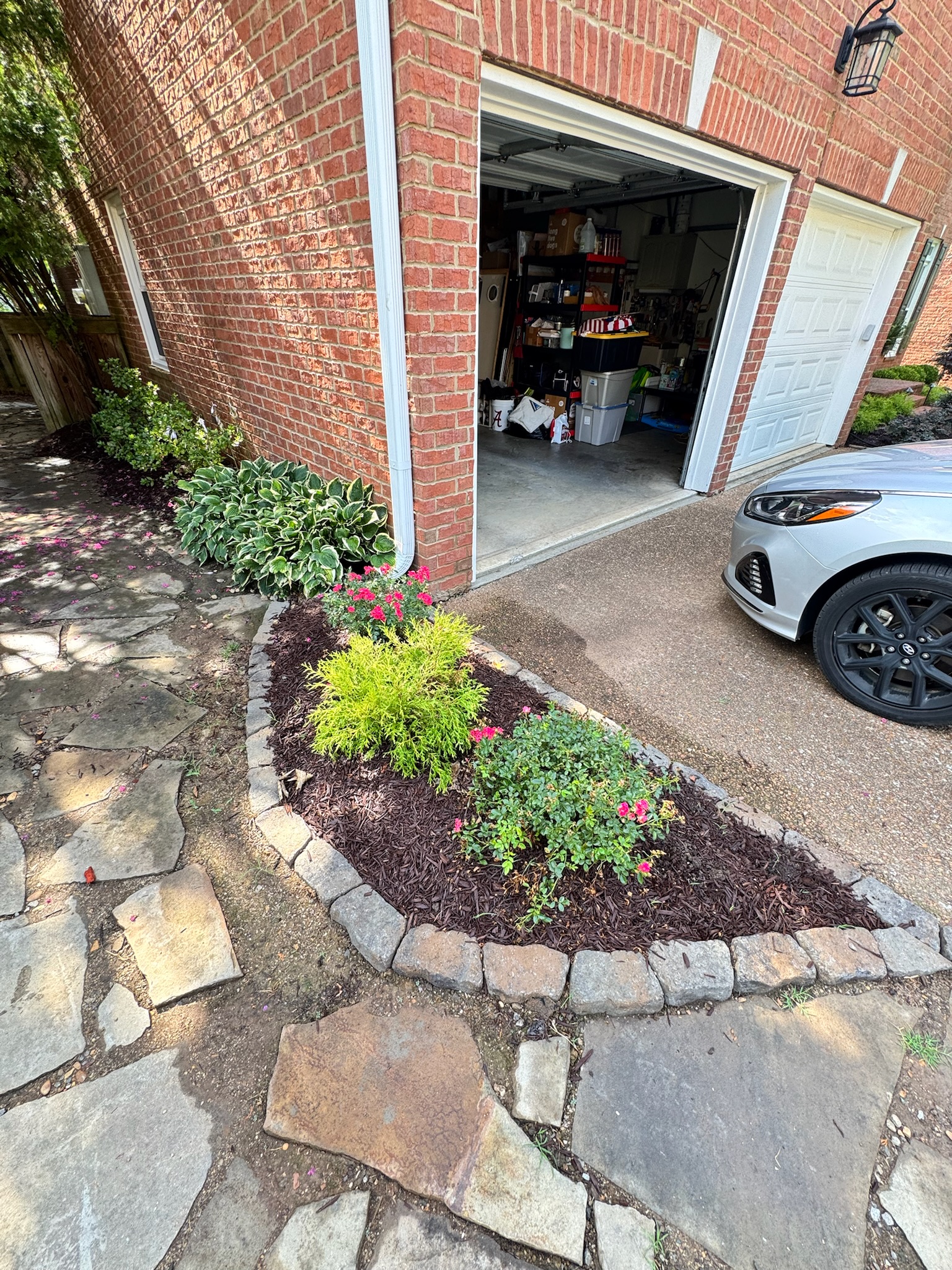
Pavers handle freeze and thaw well because the units interlock and can move slightly without cracking [4]. Flagstone does well too, but only on a strong base and in the right stone.
Our climate gives both surfaces a test. Nashville averages 50.51 inches of rain a year and 4.7 inches of snow [9]. The last spring freeze averages March 31, and the first fall freeze averages November 3 [9]. The freeze-free season is 217 days [9]. That leaves about 148 days a year when a freeze can happen.
Water that gets into joints or soaks into stone and then freezes does the damage. Three things control it.
1. The base
For patios, walks and other pedestrian areas, CMHA lists 4 inches as the minimum base under ideal conditions [8]. A site with weak soil, poor drainage or freezing weather needs a thicker base. CMHA suggests adding 50 percent for each ideal condition the site lacks [8]. Middle Tennessee soil is often heavy clay, so ask how deep the base will be.
2. Dry-laid or mortar
Stones set dry on crushed stone can move slightly and independently during freeze-thaw cycles. That makes them more forgiving in cold climates, although they may need releveling now and then [5]. One trade source says a dry-laid walkway is less expensive and less prone to cracking from freeze-thaw cycles [6]. Mortar on a concrete slab gives a very stable surface, but it demands more skill and preparation [5].
3. The type of stone
Not every flagstone resists freezing the same way. One supplier says granite is highly resistant to freeze-thaw damage and bluestone is dense enough to resist it when properly installed. It says saturated porous limestone that freezes will spall and crack [5]. Ask your contractor which stone is quoted and where it comes from.
Freeze damage starts with water. A good base lets water drain, and a good stone keeps it out.
How do they look and feel under your feet?
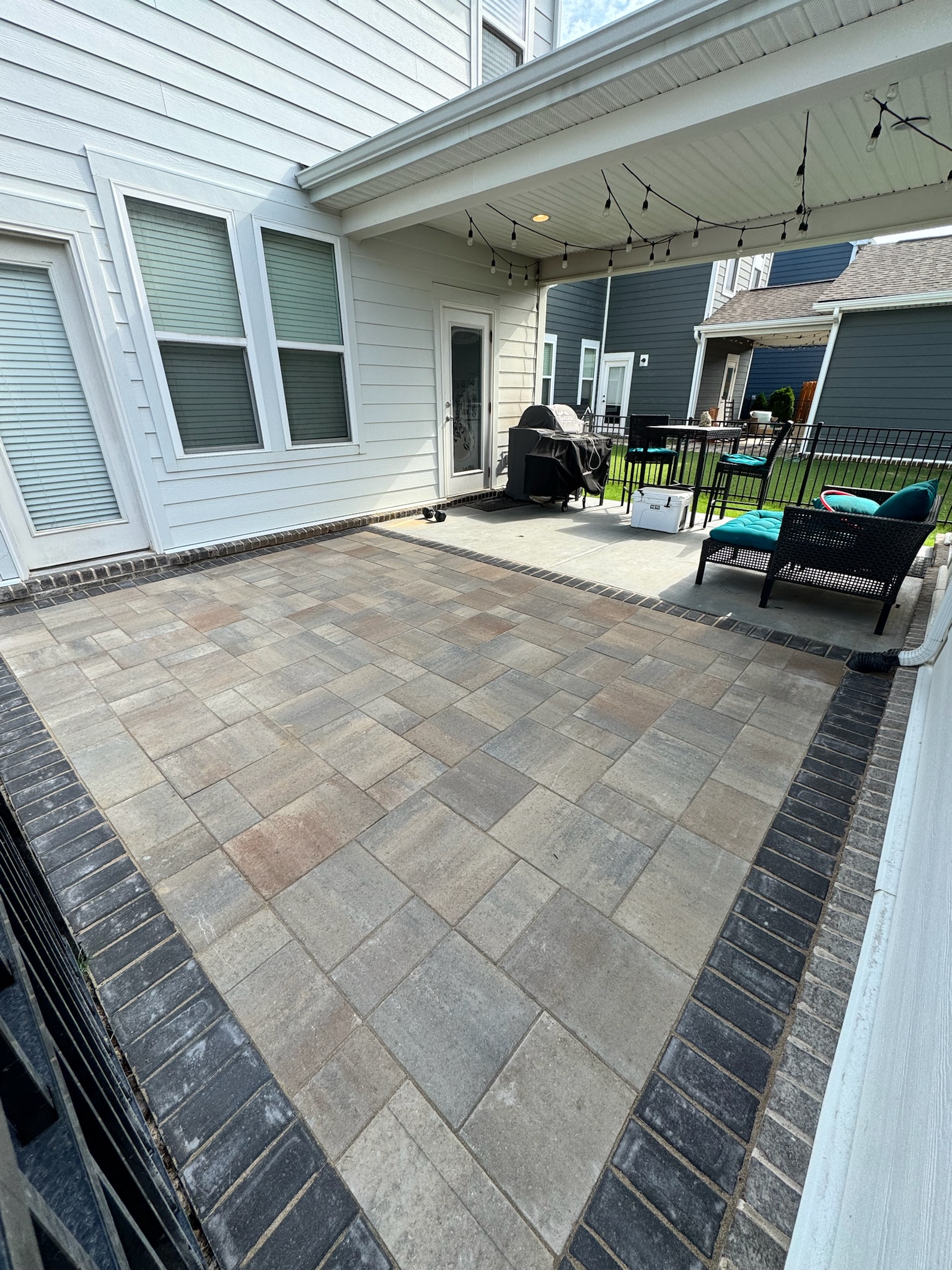
Pavers look uniform and tidy. Flagstone looks natural and varies stone to stone. Pavers also give a more even surface for chairs and tables.
Pavers come in many colors, shapes and patterns, and they are laid tightly into a unified surface [4]. Flagstone pieces differ in shape and thickness, so leveling them is harder and takes more fitting and cutting [4].
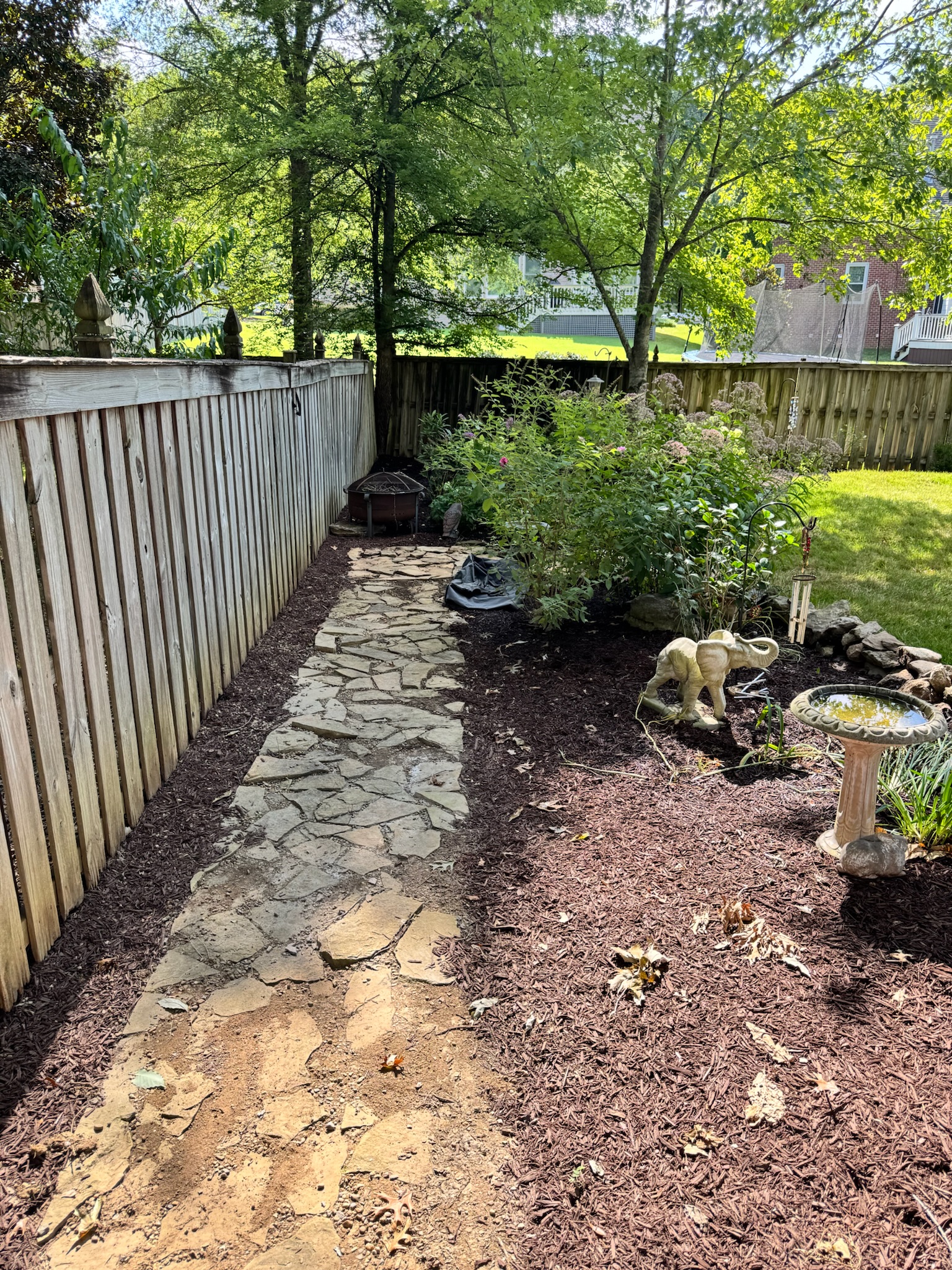
That difference matters most where you place furniture. A dining table and chairs sit steadier on a flat paver surface. Flagstone with wide joints suits a garden path or a relaxed seating spot.
What upkeep does each one need?
Pavers need sweeping and now and then new joint sand. Flagstone needs more attention to joints, weeds and sealing.
- Pavers. Routine care is sweeping and replacing polymeric sand in the joints [4]. One guide says concrete pavers need the least maintenance in the long run [11].
- Dry-laid flagstone. It needs more frequent attention to control weeds and refill joints [4].
- Sealing. Lawn Love recommends resealing a patio every 18 to 36 months, at about $115 to $245 [2]. A stone supplier says porous stone should be sealed before use and resealed from time to time [5].
- Repairs. A paver can be lifted out and replaced without disturbing the rest. Mortared flagstone must be chipped out and replaced [4].
Dry-laid or mortar: how does installation change the price?
Dry-laid flagstone sits on crushed stone and stone dust. Mortar-set flagstone sits on a concrete slab. Mortar adds the cost of the slab and more skilled labor.
A crushed stone base for dry-set work should be at least 4 to 6 inches deep, so water drains down [5]. A mortar-set slab is typically at least 4 inches thick [5]. Flagstone can be laid dry on a bed of stone dust or wet in concrete [6].
Pavers go on a compacted stone base with about 1 to 1½ inches of bedding sand. Edge restraints hold them together [7].
How a dry-laid flagstone patio goes in
- Mark the shape and dial 811. Lay out the patio and call 811 before digging.
- Excavate. The crew digs out soil to make room for the base and the stone.
- Build the base. Crushed stone goes down in layers and gets compacted, at least 4 to 6 inches [5].
- Add the bed. A layer of stone dust gives the stones a bed to sit in [6].
- Fit and level each stone. Stones of varying thickness get cut and shaped to fit [4].
- Fill the joints. Joint material goes in and the surface gets swept.
For paver patios, the steps are similar. The big difference is that pavers arrive in uniform sizes, so each one takes less fitting.
Which one fits your Brentwood or Franklin home?
Pick pavers for a clean, level patio and a tighter budget. Pick flagstone for a natural path, a garden look or a one-of-a-kind patio. Many yards in Brentwood and Franklin suit either one, so budget and style decide.
| Your situation | Lean toward | Why |
|---|---|---|
| Large dining and lounge patio on a budget | Pavers | Lower cost per square foot and a flat surface for furniture [1] [4]. |
| Brick or stone home with a formal entry | Pavers | Uniform color and pattern. Ask for samples next to your brick. |
| Wooded lot, garden path or stepping-stone walk | Flagstone | Irregular stones give a natural look. |
| Patio that must be easy to repair later | Pavers | Replace one unit without disturbing the rest [4]. |
| Wet clay spot or a slope | Either, if the base is right | Base depth and drainage matter more than the surface [8]. |
| Your HOA has a design review | Ask first | Some neighborhoods review plans first. Bring samples and a drawing. |
Pineda builds both. See our paver patio installation and our stonework and flagstone installation pages. We serve Brentwood and Franklin homeowners.
If you need a path rather than a patio, read our paver walkway cost guide.
How do you get a fair quote for either one?
Ask for the same patio priced both ways, and ask what is under the stone. A fair quote lists base depth, edging, stone type and how the stone is set.
- Measure and mark the space. Use a hose or paint to show the shape.
- Say how you will use it. Dining, lounging or a path.
- See samples in daylight. Hold them next to your house.
- Ask for a site visit. The estimator should check slope, soil and drainage.
- Get an itemized quote. Look for base depth, edge restraints, stone type, and dry-laid or mortar.
- Check HOA and city rules. Contact the City of Brentwood Planning and Codes Department or the City of Franklin Building and Neighborhood Services.
Want a rough number first? Try our landscape cost estimator.
Get a flagstone or paver quote built for your yard
Pineda Properties designs and builds patios, walkways and stonework across Franklin, Brentwood, Spring Hill, Nolensville, Thompson’s Station, College Grove, Fairview and Nashville. Pineda prices each project after a free site visit.
Get my free estimate Call (615) 899-5766Flagstone vs pavers questions from Brentwood and Franklin homeowners
Is flagstone more expensive than pavers?
Yes, in national guides. LawnStarter lists installed flagstone at $13.65 to $31.65 per square foot and concrete pavers at $8.70 to $16.70. Flagstone costs more partly because irregular stones take more labor to fit.
How much does a flagstone patio cost per square foot?
National guides give about $15 to $27 per square foot for a standard flagstone patio, installed. Other guides give wider ranges, from $8 to $35. Stone type, thickness and the base under it move the price.
Which is better in freeze-thaw, flagstone or pavers?
Pavers are the safer default. Their interlocking units can move slightly without cracking. Flagstone also works when it sits on a strong base and the stone resists water, such as granite or bluestone.
Do flagstone patios need sealing?
Porous stones should be sealed and then resealed from time to time. One national guide recommends resealing every 18 to 36 months. Ask your contractor whether your stone needs a sealer.
Is dry-laid or mortar-set flagstone better?
Dry-laid is less expensive and more forgiving in freeze-thaw. It may need releveling now and then. Mortar on a concrete slab gives a very stable surface but costs more and needs more skill.
How long do flagstone and pavers last?
Both can last 50 years or more when installed properly, according to one national guide. The base under the stone has the biggest effect on how long either one stays level.
Sources
- LawnStarter, “Pricing Guide: How Much Does a Patio Cost?”, updated October 5, 2026
- Lawn Love, “How Much Does a Flagstone Patio Cost?”, updated October 5, 2026
- Lawn Love, “How Much Does a Patio Cost in 2026?”, updated October 26, 2026
- EngineerFix, “Pavers vs Flagstone: Which Is Better for Your Patio?”, November 15, 2025
- Dynamic Stone Tools, “Natural Stone Patios: Materials, Installation, Sealing”
- Fine Homebuilding, “Laying a Flagstone Walkway”, 2003 (older source, still relevant to dry-laid versus mortar basics)
- Concrete Masonry and Hardscapes Association, Tech Bulletin PAV-TEC-010-22, “Application Guide for Interlocking Concrete Pavements”, revised 2022
- Concrete Masonry and Hardscapes Association, “Proper Concrete Paver Base and Depth: What to Know and Why It Matters”
- NOAA NCEI, U.S. Climate Normals 1991–2020, Nashville International Airport
- Pineda Properties CRM, 37 patio quotes, 2025–2026 (original data, rounded), published November 2026
- Designing Idea, “Pavers vs Flagstone (Pros and Cons, Cost and Types)”